For any use of my photos, please contact me at monika.wieland (at) gmail (dot) com

Tuesday, January 1, 2013

I Spoke Too Soon

I thought my year list was all wrapped up, but I was wrong! I went out on a couple of birding excursions to enjoy the end of December sunshine, and turned up an unexpected surprise of a Harris' sparrow (222) on Sauvie Island on the 29th. THAT turned out to be where my year list halted for 2012 - the numbers in the last post have been updated accordingly. 

On Saturday we headed to Sauvie Island, where the first major attraction wasn't avian but mammalian, and not wild but domestic:


These cows were quite interested in us, and quite photogenic:


We looked high and low for a merlin, a big miss on the year list for both me and my dad. We did see probably a dozen American kestrels, and at least as many red-tailed hawks:


We stopped at the Reeder Road observation platform where there were great numbers and variety of waterfowl. Some highlights included a canvasback, a redhead, and two female ruddy ducks, as well as most of the other unexpected duck species. Again I crossed my fingers in hopes the same birds would be present on New Year's Day.

Next stop was Rentenaar Road, where the Harris' sparrow had been reported. As I mentioned, we found the Harris', and an amazing six other sparrow species: song, white-crowned, golden-crowned, fox, Lincoln's, and savannah. We later heard some other birders also found a swamp sparrow and a clay-colored sparrow. At the end of the road we also saw a huge flock of snow geese. One other notable sighting on Sauvie Island was the amazing number of sandhill cranes - 300 is probably a conservative estimate of what we saw.

On Sunday morning "the mountains were out" as they say during a clear day in the Portland area. From Scappoose Bottoms we could see Mt. Hood, Mt. Adams, and Mt. Saint Helens. Here's a couple views of Saint Helens - the first one with a great egret and the second one with an American coot:


Along the Crown-Zellerbach trail, we scouted out some great birds that I hoped would be around on January 1, including the Virginia rail, red-breasted sapsucker, and yellow-rumped warbler.

Later that day I got to visit the neighbor's chickens, where this handsome fellow wouldn't qualify for a year list but was still fun to see and photograph:


That recaps the last birding of 2012, so next post will be about kicking off the year list for 2013, which I did today. We didn't have a white Christmas here in Columbia County, Oregon, but snow slowly fell for much of New Year's Eve, so we welcomed in the new year in wintery style. Photos of that in the next post too!

Saturday, December 29, 2012

Year List in Review ~ 2012

It's the end of another year of great birding and wildlife watching, which means it's time to look at the 2012 bird year list. At the start of the year I set three goals for myself: reach 215 species by the end of the year, reach 100 species by the end of January, and have my North American life list reach 350. Just like in 2011, I reached my first two goals but still failed to reach the 350 mark by just a couple species, though I doubled the number of life birds I added in 2012 compared to 2011.

When I started keeping a year list in 2010 I traveled up the Alaska Highway, so it's no surprise that that remains my highest annual total with 233 species. With trips this year to California and Utah, I was able to pass my 2011 total of 206 by tallying 222 species on the year. Here's my updated table comparing the three years:


2010
2011
2012
Total # Bird Species
233
203
222
Dave's Total
237
206
275/205*
Dad's Total

230
204
# States/Provinces
6
4
5
# Life Birds
23
3
6
# SJ County Species
133?
157
145
# Species by Month


January
87
114
105
February
19
13
52
March
25
12
3
April
21
25
12
May
37
17
24
June
24
2
14
July
1
4
0
August
2
4
3
September
3
5
0
October
2
1
6
November
4
4
0
December
8
2
3
*World year list/ Europe year list

The February trip to California boosted that month's total by a lot this year, and as a consequence there were fewer spring migrants to add in March and April. I also always like to try and tally at least one year bird in every month of the year, and this is the first year that I failed to do that. Looking at the monthly comparison over the last three years, it's apparent how my busy work schedule from July through December influenced my time to go birding.
I also have a friendly competition with Dave from England, who has edged me out by a few species in both the previous years. This year, taking into account the 70 species he saw on a trip to Australia, he crushed me 275 to 222. If you look at only his Europe list and compare it to my only North America list, I beat him for the first year 222 to 205.  My dad also kept a year list for the second year in a row. He fell short of his goal of 250 species, so I beat his year list for the first time, too.

Here are some bird highlights of the year 2012:
  • Our first day of birding on January 1, 2012 turned up 61 species in the greater Portland area. Will be able to reach that total on January 1, 2013?
  • In January I traveled to Boundary Bay near Vancouver, BC to see the snowy owls that were congregating there. I saw an amazing 21 snowy owls, and they became my 91st species of the year, compared to species #200 in 2011.
  • During my first COASST survey of 2012, I was able to get a photograph of five shorebird species in the same frame on Fourth of July Beach on San Juan Island.
  • Our trip to Pismo Beach, California in February was awesome for a lot of reasons, but the memory that will always stand out to me the most was visiting the butterfly garden and seeing not only thousands of Monarch butterflies but lots of great birds, including red-shouldered hawks and my first life bird of the year, a Nuttall's woodpecker.
  • In April I got to visit Three Meadows Marsh on San Juan Island for the first time. This private wetlands is an amazing waterfowl habitat, and I also added some first of the year spring birds while there. On the way to visit the marsh, I also saw and photographed a western kingbird, an uncommon species for the island.
  • In May Katie and I discovered that the owl hole near her house was in fact a nest, and we saw the chicks for the first time.
  • In June I got to help band baby bluebird chicks, and I also went to Winthrop, Washington for the first time, where the birding was amazing. Pipestone canyon turned up species such as sooty grouse, canyon wren, and prairie falcon, and I also added a couple more life birds: red-naped sapsucker and Williamson's sapsucker.
  • Our October trip to Utah didn't turn up as many year birds as I had hoped, but I did add a loggerhead shrike and rock wren to the list, reaching my goal of 215 species on the year.
So, what's on tap for 2013? I don't have quite the same trips planned, so I'm going to lower my year list goal back to 200 species for the year.

Friday, December 28, 2012

Birds In Motion

This morning my dad and I drove the Honeyman Road loop near Scappoose Bottoms to do a little bit of birding, in part to scout out the region for our January 1 birding day to kick off the 2013 year list. We turned up more than 30 species in an hour of birding, including lots of waterfowl species (mallards, wigeon, shoveler, green-winged teal, pintail....) The weather was overcast but not raining or too windy, with some views towards the mountains, like here towards Mt. Saint Helens:


Due to the low light conditions I thought I'd try to catch some images of birds in motion, and my first opportunity was this rough-legged hawk in flight:


He/she then perched in a nearby field. After scanning with the binos we found a second rough-legged hawk, the first time my dad has seen two in this area together. There were also an amazing number of red-tailed hawks, probably at least a dozen in the ten-mile loop, including a pair nearby the rough-leggeds. While we watched the raptors several hundred cackling geese flew overhead, cackling away the whole time.


Along the next stretch of road we saw some western meadowlarks - a good find that I hope we turn up again on New Year's Day. We also found lots of dark-eyed juncos and a couple flocks of golden-crowned sparrows, and a few song and fox sparrows. One field had eight great egrets, and we also saw a couple of great blue herons. There was a belted kingfisher who was looking for fish in a flooded ditch. Check out how steep his dive was off the branch:


Another red-tailed hawk was perched on a nest, maybe preparing it for the upcoming breeding season:


 The low hanging stratus clouds and flooded farm fields made for some neat scenics, like this one:


Our last stop of the day turned out to be a surprisingly productive one. In addition to hundreds of cackling geese, there were several hundred gulls. At least three species were present - most of them seemed to be mew gulls, but there were also glaucous-winged and ring-billed. Several duck species were in the middle of the flooded field, and at the edge of the marshy area we spotted six greater yellowlegs, another species that it would be great to repeat on the 1st. The real coup, however, turned up when I spotted something white among the cackling geese. We thought it was probably a gull at first, but after a closer inspection it turned out to be a Ross' goose (221)! One more year bird for the list, one that has eluded me the last couple of years.


That's likely all that will be added to the year list (I said that once before, didn't I?) unless something very unexpected turns up at my parents' feeders in the next couple of days. We'll see!

Sunday, December 23, 2012

Finally, Some Birding!

The last month has been consumed by moving facilities at work. That, along with the pretty dismal (wet and windy) weather, has left little time for birding. Our new work facility has more windows, however, so I've started a bird list there. It didn't take long to see some pretty awesome species there. The very first species on the list was trumpter swan, as I saw a pair flying over the parking lot illuminated by the golden sunrise. Later that same day, I watched a bald eagle perch on a tree top outside from our conference room. Every evening about a half hour before sunset a couple hundred red-winged blackbirds fly around in a huge flock before settling down to roost for the night. A couple days ago I saw a red-tailed hawk fly by at eye level out our second story windows, another impressive sight. A few co-workers have also started to contribute sightings and altogether we have nine species on the work list during our first two weeks of occupancy there. Not bad!

Yesterday I headed down to Portland for the holidays, making a stop at Nisqually Widlife Refuge along the way. Amazingly, despite pouring rain both before and after my stop there, the sun actually came out for a bit of a walk. My parents met me there and our first stop was the Nisqually Reach Nature Center near the river delta, where through my dad's scope we were able to spot one very distant snowy owl. There have been a lot of snowy owl sightings throughout the region again over the last month, and I'm hopeful Boundary Bay turns out to be a great spot again near Vancouver, BC sometime in the next month, because I would definitely be up for another trip there. We also spotted four brant (220), which will perhaps be my last year bird in 2012, making for a nice even number. There were also some western gulls, surf scoters, and common goldeneye on the water.

We also walked the Twin Barn Loop over at the main part of the refuge:


We mostly saw lots of waterfowl here, including hundreds of cackling geese, plus American wigeon, northern shoveler, Canada geese, gadwall, ring-necked ducks, mallards, American coot, and northern pintail. The most impressive sight, however, was probably the clouds:


Which also made for some pretty neat reflections:


There were quite a few raptors about, too. We saw two red-tailed hawks, one or two harriers, and six bald eagles. Five of the eagles were all perched together in the same tree overlooking the river. It reminded me of all the bald eagles that congregate in January and February also the Skagit River closer to home, something I'm going to be sure to check out early next year. First up, though, it's time to review the 2012 year list and kick of the 2013 year list in Oregon on New Year's Day. Look for those posts in the near future!

Sunday, November 25, 2012

A Sunny November Weekend

After a very dark and drizzly week the sun unexpectedly came out this weekend. It was great timing with my parents in town for a couple of days, so we got to go out and bird-watch in some decent weather. On Saturday we headed to the south end of the island, where I was keeping my eyes peeled for a snowy owl. Several have been seen on the island, but only briefly, as they all have seemingly moved on quickly. With lots of reports throughout Washington and nearby British Columbia, it seems like it's going to be another big irruption year for snowy owls. There was no sight of one along the Redoubt Road near American Camp, but I did relocate the rough-legged hawk I saw down there about a week earlier. It's not a great shot, but I wanted to document this locally uncommon bird:


Also in this area we found some western meadowlarks, a northern harrier, and a pair of bald eagles. Next we continued on towards Cattle Point, stopping to take a look at this red fox in its beautiful winter coat:


There were also four deer on the hillside of Mt. Finlayson, and when the sun came out I had to stop and take this photo of two of them:


At Cattle Point the highlight was a flock of about 30 black turnstones that landed on the rocks right below us. It was cool to look down on them chittering away as the waves crashed over the rock they were standing on. All the other usual sea bird species were around too, including surf scoters, harlequin ducks, a black oystercatcher, horned grebes, and red-breasted mergansers. We also saw a red-tailed hawk and a flock of about 200 starlings doing amazing aerial formations.

Next stop was Fourth of July Beach for a COASST survey. There weren't any stranded seabirds, but there were plenty more good bird sightings. The highlight for me was all the shorebirds, including another twenty or so turnstones, half a dozen black-bellied plovers, and two dunlin. There were also some song sparrows and Pacific wrens darting in and out among the driftwood.

Today we decided to bird more of the interior of the island. Our first stop was Sportsman Lake where we found several trumpeter swans, about 20 hooded mergansers, a good number of ring-necked ducks, and a few bufflehead, pied-billed grebes, double-crested cormorants, and American wigeon. There was also one common merganser. We next swung by Egg Lake, where there were a few more swans and a nice group of American coot. Here's the view across the dock at Egg Lake:


We continued out towards Roche Harbor and drove the White Point Road loop which takes you right down to the water of Wescott Bay. There were a few red-breasted mergansers here, so we got to see all three merganser species on the day. I also spotted two horned grebes and a pigeon guilemot. The reflections of the cumulus clouds in the calf waters were probably the most stunning sight at this stop:


It wasn't much further down the road that we stopped to view six California quail that were hanging out near the road. Often skittish, these guys were more accommodating, hanging out for a while as we took photos from the car:


Also on this stretch of road we found a big flock of pine siskins. It was pretty quiet bird-wise at the lagoon near Roche Harbor except for a couple of ravens and a kingfisher, but before heading back to town we made one more stop at the ponds south of British Camp which are often good for ducks this time of year. They didn't disappoint! We saw more swans, Canada geese, and a group of 11 greater white-fronted geese, only the second time I've seen this species on the island. In addition to a lot more ring-necked ducks, bufflehead, and wigeon, there were also our only mallards of the day, a pair of northern shoveler, and one more common merganser. With only a couple hours birding each day, we turned up more than 50 species on the weekend - not bad!

Sunday, November 18, 2012

Orca Gift Ideas

A combination of being busy at work and feeling under the weather for the last two weeks has kept me from getting out too much or having much time to blog. Zazzle asked me to post some of my products in a blog post, so in the interim I thought I would do just that with some photo gifts that make great holiday presents. Get a great deal on a unique product and help support this writer and photographer at the same time!

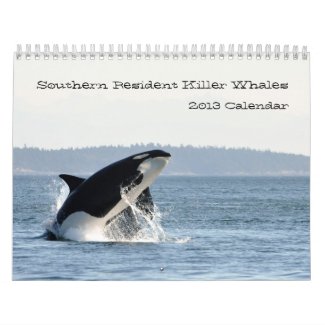
My most popular yearly product is always my annual Southern Resident calendar. My 2013 calendar features pictures all taken during the 2012 season, so if you've gotten one of my calendars in the past, you won't see any repeat images here. You can save 25% off your calendar, too, using coupon code CALENDARTIME at check out!
2013 Southern Resident Killer Whale Calendar
2013 Southern Resident Killer Whale Calendar by OrcaWatcher
Browse more Orca Calendars

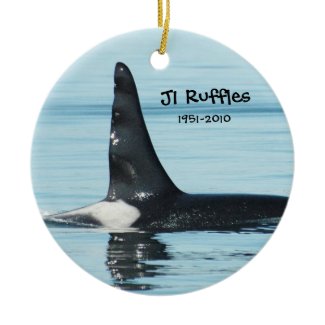
J1 Ruffles was one of the most iconic and popular of the Southern Residents. I made this Christmas ornament honoring him when he went missing in 2010:
 
J1 Ruffles Tribute Ornament
J1 Ruffles Tribute Ornament by OrcaWatcher
More Orca Ornaments

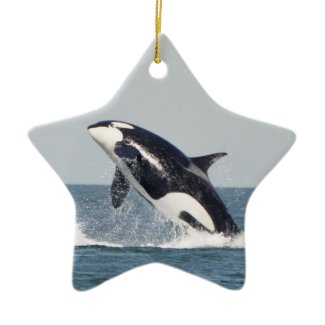
Here's another ornament featuring a breaching orca. Order one of each  (or any two ornaments) and save 25% using coupon code TWOORNAMENTS


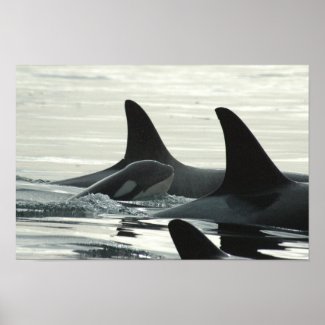
My most popular photo has long been this image, entitled "You'll Never Swim Alone". It features the calf K42 Kelp, his mom K14 Lea, and elder female J8 Spieden. Enjoy it as a poster or canvas print:
You'll Never Swim Alone Posters
You'll Never Swim Alone Posters by OrcaWatcher
Browse for more artwork prints

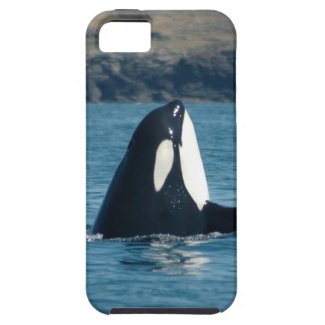
I've also got a series of iPhone, iPad, and iPod cases available. Here's a new one for an iPhone 5 featuring a spyhop from J27 Blackberry:


Spyhopping Orca iPhone Case
Spyhopping Orca iPhone Case by OrcaWatcher
View more Orca Casemate Cases

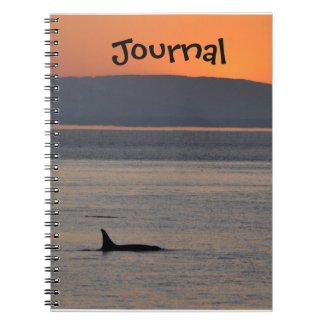
If it's been a while since you've been on Zazzle, they've added lots of new great products recently. Here's one of my favorites, journals:
Sunset Orca Journal Notebook
Sunset Orca Journal Notebook by OrcaWatcher
Browse other Orca Notebooks

And here's another simple one that I like, notepads:
Spyhopping Orca Notepad
Spyhopping Orca Notepad by OrcaWatcher
Browse Orca Notepads

Thanks for taking the time to look, and I would be honored if any of these products would make great gifts for anyone on your holiday list. Even if you don't purchase from me, take a moment to look around at all the great artwork featured on Zazzle, or maybe even create some products of your own!

Sunday, November 4, 2012

Day of the Dead ~ 3rd Annual Tribute

This is my third year writing a Day of the Dead blog post to honor the Southern Resident Killer Whales that we've lost during the preceding year. Unfortunately in the last 12 months, we've lost an astounding seven whales.

J48 was the fifth offspring born to J16 Slick. The calf was first seen in December 2011 and was missing the next month. I didn't get to meet this little whale, who in addition to mom left behind three surviving siblings: J26 Mike, J36 Alki, and J42 Echo.

L112 Sooke, born 2009, seen here with L47 Marina, L86 Surprise, and L91Muncher
The death of L112 Sooke remains particularly sad and mysterious. I documented her story in detail in a separate blog post. She washed up on a beach in Long Beach, Washington in February 2012 with blunt force trauma. The exact cause of her death has not been determined, but a necropsy showed that her wounds were not consistent with a ship strike or predation event. Following her death, activities of both the US and Canadian Navy received a lot of scrutiny, from underwater sonar testing to the bomb range that exists off the Washington coast. Hopefully, the result of all this is that additional precautions be put in place to protect this endangered population of whales from underwater noise and explosions that could lead to permanent injury and death. In the near future her skeleton will be on display at The Whale Museum in Friday Harbor. It is always sad to lose a whale, particularly a young whale, but even more so a young female. L-Pod does not have many juvenile females, without which this population has no chance of recovery. Sooke was one of the few.

J30 Riptide, born 1995, seen here with L53 Lulu and J1 Ruffles
I was shocked when I heard that J30 Riptide had not been seen this spring. J-Pod has always seemed like the most resilient of the three pods, but Riptide is the second young adult male in the pod to die prematurely in recent years (the other was J33 Keet in 2010). Riptide was the second known offspring of J14 Samish and despite being just 16 years old already had a huge dorsal fin that was nearly fully grown. One of the very first pictures I took of Riptide shows him with J1 Ruffles, and the two proved to be regular companions over the years until the death of Ruffles. That's why I chose to honor him with the above picture, showing the two males together in Boundary Pass several years ago. I imagine Riptide must have been learning a lot from the oldest male among the Southern Residents, and it's a shame he won't be able to put the knowledge to use as a breeding adult male. Riptide is the probable great grandson of J2 Granny and also leaves behind three younger siblings.

L12 Alexis, estimated birth year 1933
At an estimated age of 79, Alexis lived the long, fruitful life of a matriarch resident whale. She's the namesake for the L12 subgroup, a well-known portion of L-Pod that tends to spend a lot more time in inland waters than the rest of the Ls. Her strong ties throughout her life with the L28 and L32 matrilines seems to be a key reason these three families travel together so much of the time. She was often associated with both of these mothers as well as with their offspring, and late in her life seemed to have become the adopted mom of L85 Mystery, the son of L28 Misky. The probable grandmother of the iconic male L41 Mega, Alexis, like Mega, also had two notches on her dorsal fin that made her distinct. Earlier this year I wrote a creative piece imagining a day in the life of Alexis where she was surrounded by her extended family. A mainstay throughout my whale watching years and well before that, I had no idea I would never see her again.

L5 Tanya, estimated birth year 1964, seen here with her son L73 Flash diving beside her
Unlike Alexis, L5 Tanya was part of a group of L-Pod whales that does not spend a lot of time in inland waters. As such, I never got to see too much of her, and was always excited when I did as she remained a more unknown whale to me. She only had two known offspring, both sons, and both very distinct males. L58 Sparky was one of the first few whales I learned to identify around the year 2000. He was easy to pick out because this was a time when there were only 3 or 4 fully adult males in the whole population. Her other son, L73 Flash, was a bit of a Ruffles lookalike. Unfortunately both sons preceded Tanya in death. Tanya had a bit of a unique dorsal fin, at least to my now more highly trained eye. The middle of the back trailing edge seemed to bulge out, easily seen in the above photograph where she is silhouetted. She also had a distinct line across one of her saddle patches, and a testament to how rarely I saw her is the fact that I never got a great picture showing this unique marking very well. With her passing, Tanya leaves behind young male L84 Nyssa, her sister's grandson, as the only surviving member of the L9 matriline.

K40 Raggedy, estimated birth year 1963
Raggedy! I still can't believe you are really gone. Talk about a whale with a unique history, of which we only know a very small piece. One of the unknown parts is how she got all those notches that made up the tattered trailing edge of her dorsal fin. I first learned about Raggedy's interesting family when I wondered how she was already numbered the 40th whale in K-Pod when at the time there was no K39, K38, K37, and so on. It turns out this is because she, along with the rest of her family group, were originally designated as L-Pod whales. Before 1977 they were always seen with L-Pod. Then, between 1977 and 1981 they started being seen with Ks, and after 1981 were almost always seen with Ks. Michael Bigg suspected they might be Ks due to their acoustic call types, and in 1986, coinciding with the birth of K21 Cappuccino into this family group, the switch from L to K was officially announced, the only time any whales have had their pod designation changed.

Raggedy's family was our first clue that matrilines are probably more stable than pods, as we've seen other whales and groups of whales seemingly shift pod associations for both short and long lengths of time. While there is a genealogy written out for this group of whales (the K18 and K30 matrilines), it seems the mother-offspring relationships have never really been clear as the family associations were reorganized several times. What is known is that Raggedy was never seen with a calf, leading to speculation that she was probably infertile. 

One of my first-ever whale encounters was with Raggedy and her suspected mom, K18 Kiska, and probable brother K21 Cappuccino. I was aboard the Bon Accord in Haro Strait. The boat was parked as we watched a social multi-pod gathering milling about when we were surprised by three whales that popped up closer to us than all the rest: Kiska, Raggedy, and Cappuccino. This was the first time I had ever been this close to a wild whale, and the video camera I had rolling at the time recorded my frantic, excited comments as Raggedy surfaced right beneath me. "I got wet from the spray!" I called out in a shaky voice. "Oh my God!" There was no going back for me from that moment.

Raggedy leaves behind her stalwart companion Cappuccino. In recent years these two whales have often traveled between pods with K16 Opus and K35 Sonata, continuing the rogue ways of the family group. Early sightings indicate Cappuccino, Opus, and Sonata will carry on the unpredictable tradition in Raggedy's absence.

L78 Gaia, born 1989
L78 Gaia is another whale from a very independent family group: the L2 matriline. At just 23 years old, it also feels like we lost Gaia way too early, but unfortunately he follows a trend of other L-Pod whales that we have recently lost in their 20s. Since 2008, the family group has just been made up of L78 Gaia, mom L2 Grace, and Gaia's younger brother L88 Wavewalker. The three whales were sometimes seen with no other Southern Residents. On one memorable day they were spotted near Lopez Island and initially identified as transients since there were only three of them, though this is a bit hard to believe since all three have distinct open saddle patches that transients never sport.

Gaia was the uncle of L98 Luna, the young whale who somehow got separated from his mom and spent years alone in Nootka Sound off the west side of Vancouver Island. In 2009 Gaia showed up with a wicked scrape on his dorsal fin, a wound so gruesome observers worried it could become infected. He seemed to heal up from this just fine, and it wasn't too long before he had just a faint scar on the front of his dorsal fin. I always thought of Gaia as having a very broad dorsal fin, one that will truly be missed by me among the other L-Pod whales.

So those are the whales we have lost this year - unnamed J48, Sooke, Riptide, Alexis, Tanya, Raggedy, and Gaia. We have had just two new arrivals in that time. L119, a girl, was born to L77 Matia, a calf I was very happy to hear about. Both Matia and her sister L94 Calypso had calves in 2010, but Matia lost hers, and I could only imagine what it was like for her as a bereaved mom to watch her younger sister with a healthy baby. It must have been very bittersweet. Now she has another little youngster of her own, which amazingly I never got to meet this summer. Perhaps an indicator of the shifting patterns as a result of Alexis' death (Matia and Calypso, along with Mega, are also her probable grandchildren), the L12s did not spend nearly as much time doing their regular westside shuffle off of San Juan Island this summer. I saw very little of this family group this year and look forward to seeing both sisters with their healthy calves next year.

The other birth was J49, a boy, born to J37 Hy'shqa. In a rare case of a Southern Resident being born in inland waters, we actually know the birthday of J49 is August 6th, and he was born somewhere around Turn Point on Stuart Island. With his birth, Hy'shqa became the youngest mother on record at just over 11 years old. I was worried about these two whales, since the other young mom I witness (K28 Raven was just 12 when she gave birth to K39 in 2006 ) both perished shortly thereafter. But so far, both mom and calf seem to be doing just fine, and Hy'shqa has lots of help from her extended family. J49 is the first grandchild to productive mother J14 Samish and is also the first great-great grandchild to J2 Granny.
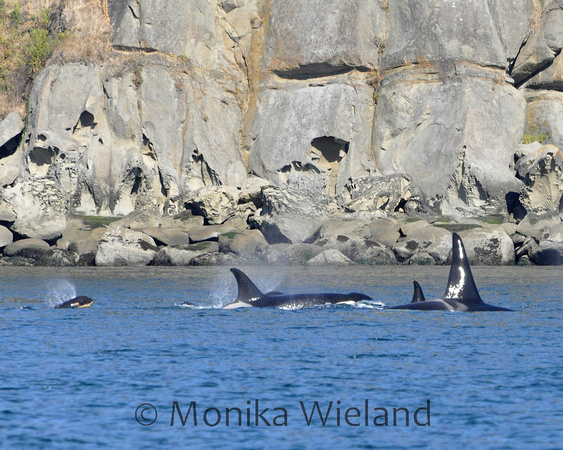
J49, left, seen here at about six weeks old following behind grandmother J14 Samish and uncle J26 Mike

This years births and deaths leave us at 84 whales in the Southern Resident Community. To the ones you have lost, you will be dearly missed, and to those that have arrived, we welcome you and hope you live to see the recovery of this endangered population.